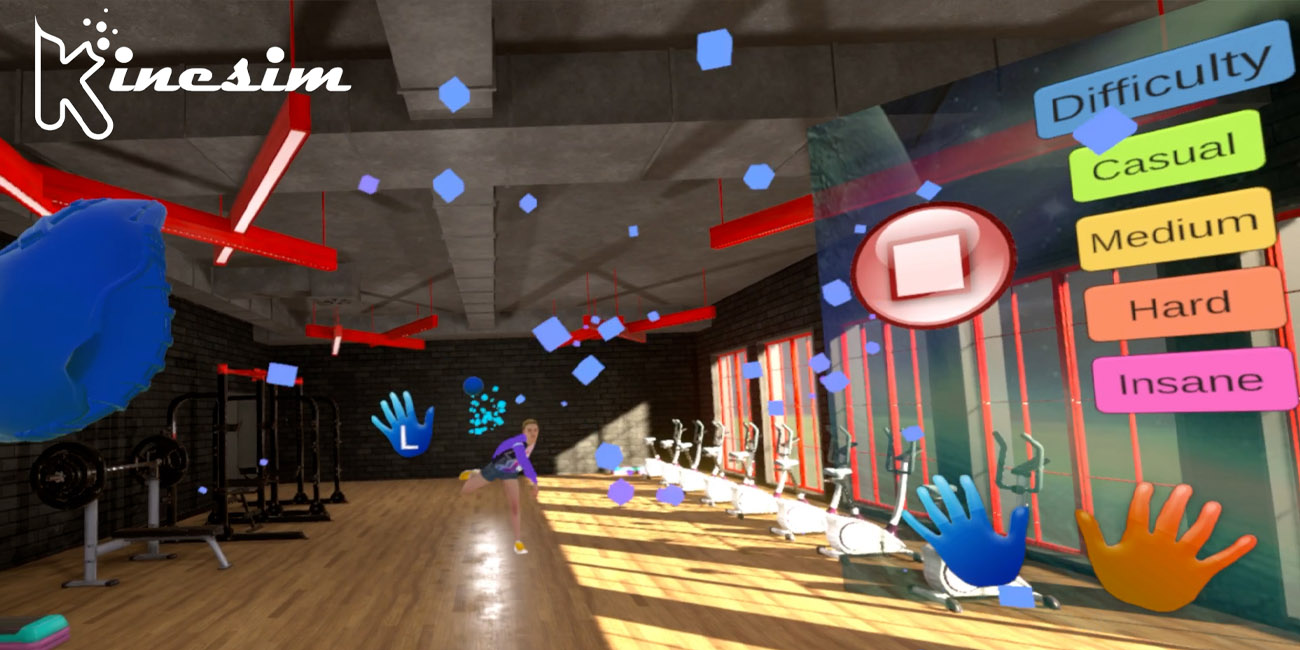
Overview
Kinesim uses interactive immersive systems to make therapeutic movement feel engaging, playful, and repeatable.
Audience need
Therapeutic exercise often benefits from motivation, feedback, and a sense of play.
Interaction
The work frames movement as an interactive experience rather than a dry compliance task.
Direction
Built with room for broader therapeutic and wellness applications.
Challenge
Therapeutic interaction design has to balance delight with clarity. If an experience is too clinical, it can feel disengaging. If it is too abstract, it can stop being useful. The challenge was finding a tone where movement, feedback, and immersion support each other.
Approach
Kinesim treats strengthening the mind and body as something inviting rather than obligatory. That makes the interaction design question as important as the technical one: how do you encourage motion, attention, and participation without overwhelming the user?
Implementation
The original line was concise: immerse yourself in fun therapeutic experiences that strengthen the mind and body. The work sits at the intersection of interactive development, experience design, and therapeutic intent.
That points to a reusable product direction rather than a single isolated prototype, with immersive interaction serving practical wellness outcomes.
Outcome
Kinesim points toward a broader category of useful interactive work: immersive systems that support health, engagement, and sustained behavior.